

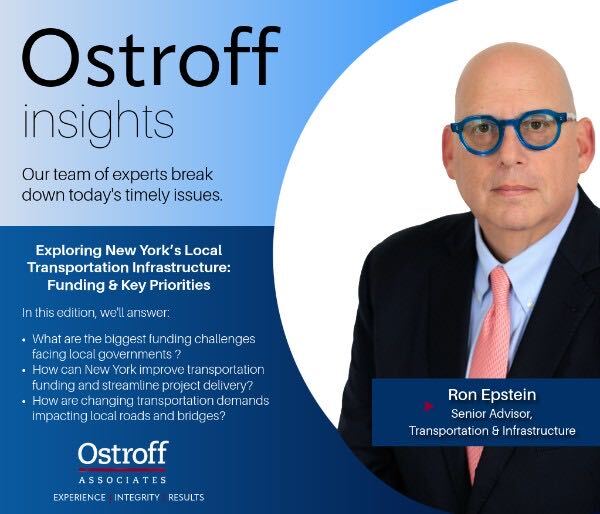


Local governments maintain nearly 90% of New York’s roadway pavement network and roughly half of the State’s bridges. Counties, cities, towns, and villages are therefore not simply stakeholders in New York’s transportation system - they are essential partners in maintaining and modernizing it.
But the cost of that responsibility is growing.
Aging infrastructure, higher construction costs, workforce pressures, changing vehicle demands, and increasingly complex project-delivery requirements are stretching local capital programs. The central policy question is no longer simply how much New York invests in transportation, but whether funding and policy decisions reflect the infrastructure local governments maintain - and whether those dollars can be put to work efficiently. I recently had the opportunity to discuss these challenges with county leaders at the New York State Association of Counties (NYSAC) Fall Seminar in Onondaga County.
Local Infrastructure Needs Are Outpacing Resources
Rising labor, material, equipment, engineering, and construction costs have fundamentally changed the economics of infrastructure investment. As costs increase, the purchasing powers of the Consolidated Local Street and Highway Improvement Program (CHIPS) and related State-supported local transportation programs decline. Even when appropriations remain stable or increase modestly, municipalities may not be able to deliver as many repaved roads, bridge rehabilitations, and safety improvements.
Maintaining Transportation Appropriations Does Not Necessarily Maintain Transportation Investment.
This challenge is compounded by the disconnect between local infrastructure responsibilities and available resources. Local governments maintain much of the transportation network New Yorkers use every day but compete for limited State and federal capital funding. That places increasing pressure on local budgets and taxpayers while forcing difficult decisions about which infrastructure projects move forward and which must wait.
Strengthening Local Transportation Investment
CHIPS, PAVE-NY, Extreme Winter Recovery, BRIDGE NY, and related programs are critical to maintaining local roads and bridges. Protecting these programs is essential - but strengthening their purchasing power is equally important. A sustainable transportation strategy should provide predictable funding that reflects rising project costs, supports multi-year capital planning, and allows communities to keep pace with infrastructure deterioration. Our discussion at NYSAC focused on five broader priorities:
Funding Is Critical - But So Is Project Delivery
Securing State or federal funding is often only the beginning of a local infrastructure project. Environmental reviews, design approvals, procurement requirements, permitting, and State oversight can add time and cost before construction begins. Every unnecessary delay reduces the value of limited infrastructure dollars. New York should establish more predictable review schedules, improve coordination between State agencies and local sponsors, ensure sufficient staffing for project reviews, and prioritize approvals once funding has been committed. The objective is not less oversight, it is greater accountability for both outcomes and timelines. Moving projects efficiently from funding award to construction maximizes public investment and gets infrastructure improvements into communities sooner.
Preparing for a Changing Transportation System
Transportation policy must also account for changing demands on local infrastructure. Modern agricultural equipment has become larger and heavier, particularly affecting rural roads and bridges. Electric school buses and heavy-duty electric trucks also weigh more than comparable conventional vehicles because of their battery systems, creating additional challenges for infrastructure already subject to weight restrictions. These changes reinforce the need to coordinate transportation policy with infrastructure investment. As New York advances new transportation technologies, local governments need resources to assess vulnerable roads and bridges, identify necessary improvements, and incorporate those costs into capital planning. The same principle applies to regional public transportation. Rising labor, vehicle, maintenance, insurance, energy, and technology costs are placing increasing pressure on local transit systems. State operating and capital assistance should reflect the actual cost of providing reliable service and modernizing these systems.
Aligning Policy with Local Responsibility
New York’s infrastructure challenges cannot be addressed through a single program or budget appropriation. The State Budget, NYSDOT capital planning, federal surface transportation programs, regulatory requirements, procurement rules, and project-delivery policies all influence what local governments can ultimately build and maintain. Federal policy will be particularly important as future surface transportation programs are developed. Local roads and bridges should not be viewed separately from nationally significant infrastructure. They provide the first and last-mile connections linking residents, businesses, farms, schools, hospitals, airports, and industrial facilities to the broader transportation network. Funding policy at every level of government should recognize that connection.
Turning Local Priorities into Statewide Policy
Although infrastructure needs vary by community, the underlying challenges are often shared. This creates an opportunity to translate local concerns into a coordinated statewide agenda. By defining common priorities and connecting them with decisions being made in Albany and Washington, local governments can strengthen their case for the resources and reforms necessary to maintain and modernize New York’s transportation system. At Ostroff Associates, we work with local governments and regional stakeholders to develop State Budget and legislative priorities, engage State and federal decision-makers, build coalitions, identify funding opportunities, and advance policies that better reflect local infrastructure responsibilities. New York’s roads, bridges, transit systems, and airports are fundamental to economic development, public safety, mobility, and quality of life.
The question is not simply how much New York invests in transportation. It is whether those investments reach the infrastructure where they are needed most - and whether local governments have the resources and tools to turn those investments into results.
Why is additional local transportation funding needed?
Why are CHIPS and related programs important?
How can New York accelerate local transportation projects?
How are changing vehicles affecting local infrastructure?
